We all have our little corners… private spaces where we can relax, put our feet up and just be ourselves. I asked a group of beautiful and creative women to post photos of their very own Little Corner. Here are their contributions, each little corner unique, all equally beautiful.
***
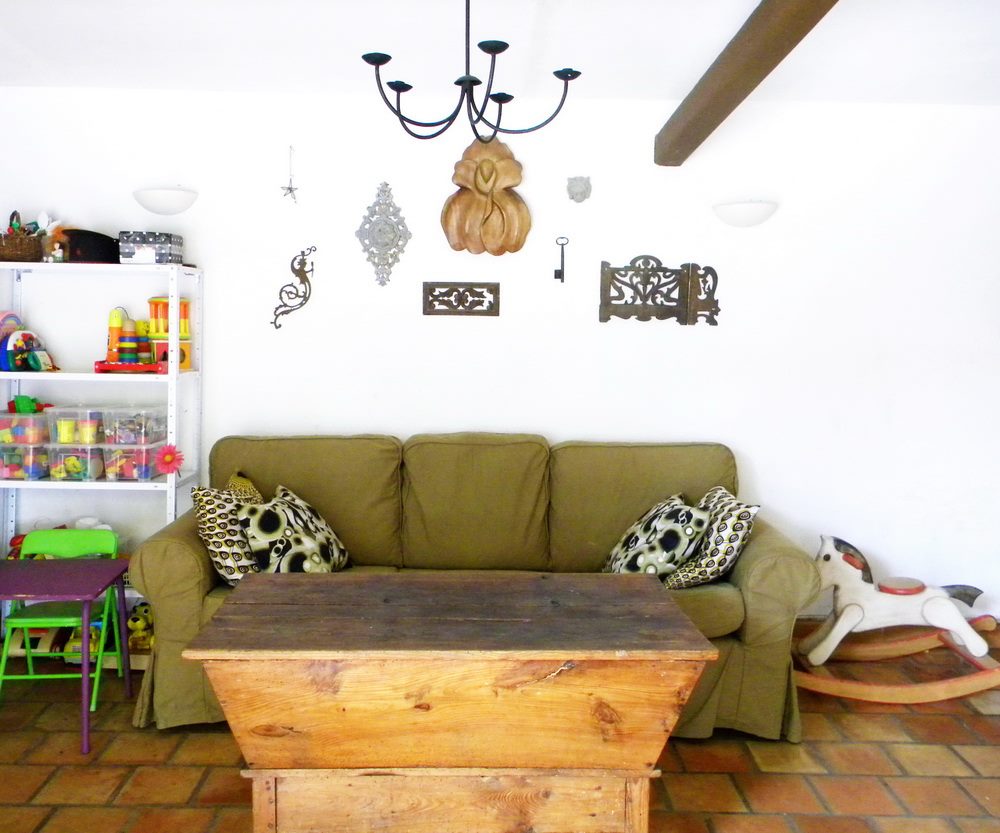
Apol’s Sofa
Apol Lejano-Massebieau lives in the South of France with husband Pierre and daughter Lilou. She is the woman behind La Pomme, an on-line shop where she sells her own hand-sewn creations and vintage finds. Here, she shares with us her little corner where she says a lot of her creative ideas are born.
In her words:
I need a lot of quiet and solitude so I sleep much later than my husband and daughter. While they’re in their beds, I park myself on this sofa until around 1:30 in the morning, thinking, planning, or just doing some awake-dreaming. I initially wanted a leather sofa, but my husband is a big fan of comfort and wanted a sofa that was, in his words, a giant pillow, so we got this from Ikea. I was initially not a fan, pero love ko na siya ngayon, some nights I even fall asleep here.
The table is a “pétrin” that we found in the flea market. It was used by bakers before, for kneading bread, and storing the dough. Those are all Lilou’s toys you see on the left. On the right is the rocking horse I bought from an artisan in the Jura, for Lilou’s second Christmas. The pillowcases I made myself from African wax fabric. The things on the wall are my found treasures. Sculpture by Jenny Cortes, the first artwork I ever bought, from one of my first paychecks ehem-ehem years ago.
Apol just recently launched her second creative business called 7100 Islands. Check it out here.
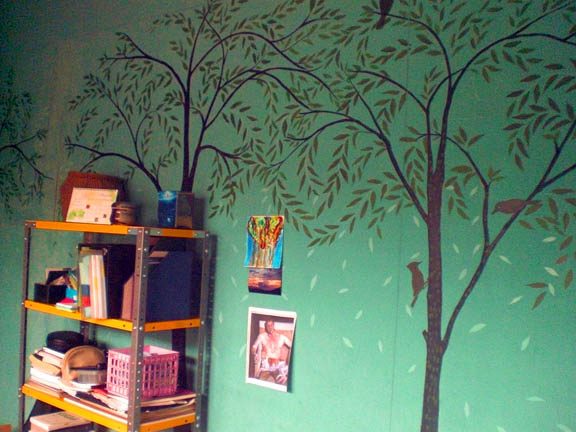
Elizabeth’s Sanctuary
Pilates Instructor, part-time painter, and multi-sport addict, Elizabeth Siojo painted the walls of her old studio/home office with trees and birds. She recalls just how much she loved the creaky floors and the light flooding into the room.
In her words:
(This is) my old studio-office, back when we had this lovely old 1940s-era house in QC. Second storey, wooden walls, floors, staircase of solid wood. Big garden, trees in the yard. Saw local birds in the branches outside the window, even a sunbird! The windows were 70s-era instead of the 40s shutter-type. There’s a papag in a corner where I put drawings. I painted and drew here listening to my cds and You Tube music. I did the trees and birds in the walls. There were boxes of my magazine collections, books and brushes . Its a nice mess. We’ve moved since late last year, when the house was sold. It’s been torn down when we drove by recently.
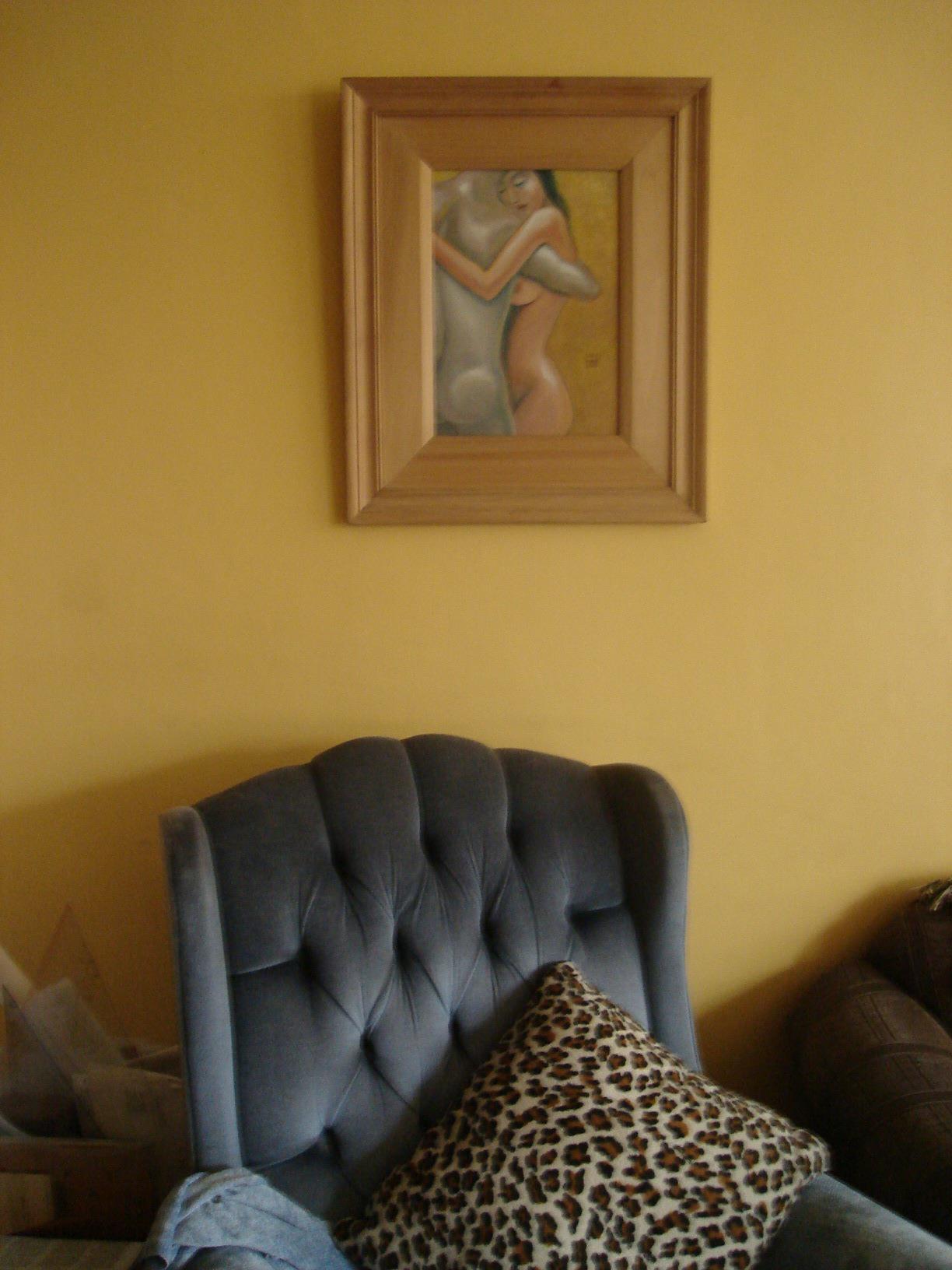
May Tobias Papa, a writer and illustrator of children’s books, bought this secondhand wing chair from a thrift shop in Kamuning for only Php 4,500. One can only imagine what went on in this chair (*wink wink*) so let’s just let her do the talking.:)
In her words:
We are currently in between houses right now as we are having the house we had just bought fixed, and this photo was from our old apartment in Maginoo St. The teal blue velvet-upholstered wing chair is a leftover piece from a condo unit I rented as a single woman, which found new uses (well, not really, because we were just legalized) when as a newly married woman, the hubby and I felt sexy, hahaha, and when I got pregnant because it was so comfy when I put my feet up to rest and feel my baby throwing punches or kicking around in my tummy, or listen to him hiccuping. After I gave birth it became my breastfeeding corner, and then after that, my reading and TV watching chair… I love its very elegant lines and proportion, very unlike the squat and ugly wing chairs that are usually sold. The painting over it is a magical piece, my friends say, because I met my future husband just a few months after I painted it for my MFA painting class exhibit. I am having the wing chair reupholstered (in red or damask fabric perhaps?) as an accent piece in our new white living room. It’s a chair I wish to keep forever and grow old in.
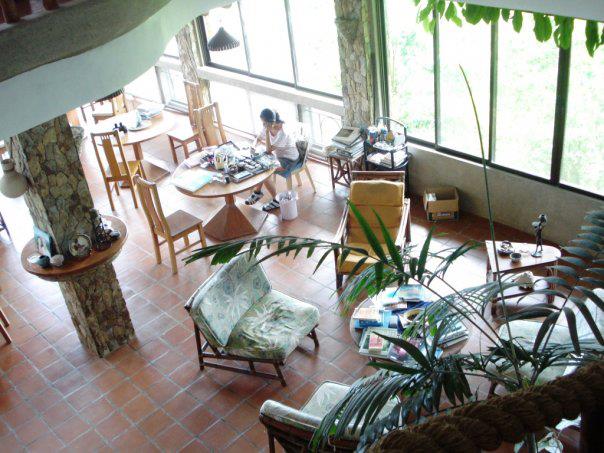
This is Bernadette Wolf’s ‘mansion’, perched on a steep incline somewhere in beautiful Puerto Galera. Originally meant to be a retreat house, she says she treasures the quiet and solitude here.
In her words:
A view of my mansion where I am the reyna and the aliping namamahay all in one. It really is a wonderful place to just sit quiet and make artworks. Socializing hereabouts is kept at a minimal…I do not have much to make tsismis about anyway. We do not have the usual TV but the windows around the house is enough.
Watch out for Part 2 of My Little Corner! You can also share with us your own Little Corner. E–mail your photo (with at least 800px width) to adosimple@yahoo.com. Don’t forget to write a short description!
Pico Iyer is one of my favorite travel writers. Starting as an essayist for Time magazine in 1986, his career spans 25 years. He has travelled the globe and seen it all. That’s why it’s surprising to know that he doesn’t own a cell phone nor has he ever ‘tweeted or entered Facebook.” Here, he writes about why being off the grid is probably a good thing.
The Joy of Quiet
by Pico Iyer
ABOUT a year ago, I flew to Singapore to join the writer Malcolm Gladwell, the fashion designer Marc Ecko and the graphic designer Stefan Sagmeister in addressing a group of advertising people on “Marketing to the Child of Tomorrow.” Soon after I arrived, the chief executive of the agency that had invited us took me aside. What he was most interested in, he began — I braced myself for mention of some next-generation stealth campaign — was stillness.
A few months later, I read an interview with the perennially cutting-edge designer Philippe Starck. What allowed him to remain so consistently ahead of the curve? “I never read any magazines or watch TV,” he said, perhaps a little hyperbolically. “Nor do I go to cocktail parties, dinners or anything like that.” He lived outside conventional ideas, he implied, because “I live alone mostly, in the middle of nowhere.”
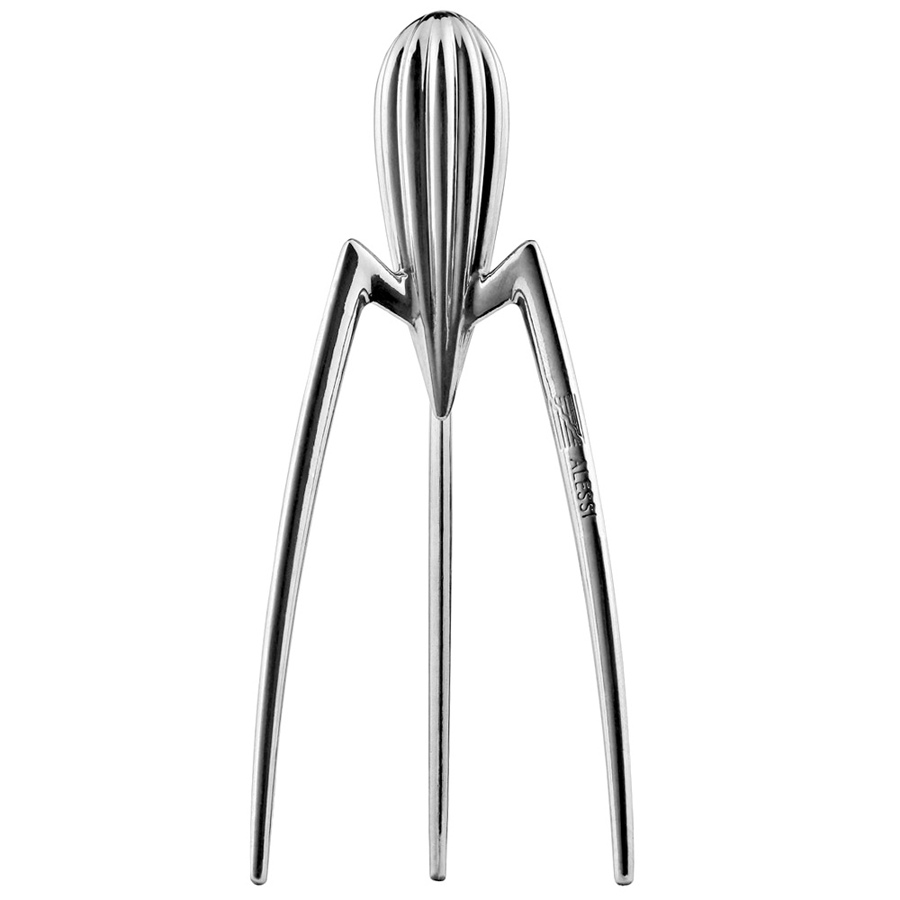
The iconic Juicy Salif by Philippe Starck, 1990
Around the same time, I noticed that those who part with $2,285 a night to stay in a cliff-top room at the Post Ranch Inn in Big Sur pay partly for the privilege of not having a TV in their rooms; the future of travel, I’m reliably told, lies in “black-hole resorts,” which charge high prices precisely because you can’t get online in their rooms.
Has it really come to this?
In barely one generation we’ve moved from exulting in the time-saving devices that have so expanded our lives to trying to get away from them — often in order to make more time. The more ways we have to connect, the more many of us seem desperate to unplug. Like teenagers, we appear to have gone from knowing nothing about the world to knowing too much all but overnight.
Internet rescue camps in South Korea and China try to save kids addicted to the screen.
Writer friends of mine pay good money to get the Freedom software that enables them to disable (for up to eight hours) the very Internet connections that seemed so emancipating not long ago. Even Intel (of all companies) experimented in 2007 with conferring four uninterrupted hours of quiet time every Tuesday morning on 300 engineers and managers. (The average office worker today, researchers have found, enjoys no more than three minutes at a time at his or her desk without interruption.) During this period the workers were not allowed to use the phone or send e-mail, but simply had the chance to clear their heads and to hear themselves think. A majority of Intel’s trial group recommended that the policy be extended to others.
THE average American spends at least eight and a half hours a day in front of a screen, Nicholas Carr notes in his eye-opening book “The Shallows,” in part because the number of hours American adults spent online doubled between 2005 and 2009 (and the number of hours spent in front of a TV screen, often simultaneously, is also steadily increasing).
The average American teenager sends or receives 75 text messages a day, though one girl in Sacramento managed to handle an average of 10,000 every 24 hours for a month. Since luxury, as any economist will tell you, is a function of scarcity, the children of tomorrow, I heard myself tell the marketers in Singapore, will crave nothing more than freedom, if only for a short while, from all the blinking machines, streaming videos and scrolling headlines that leave them feeling empty and too full all at once.
The urgency of slowing down — to find the time and space to think — is nothing new, of course, and wiser souls have always reminded us that the more attention we pay to the moment, the less time and energy we have to place it in some larger context. “Distraction is the only thing that consoles us for our miseries,” the French philosopher Blaise Pascal wrote in the 17th century, “and yet it is itself the greatest of our miseries.” He also famously remarked that all of man’s problems come from his inability to sit quietly in a room alone.
When telegraphs and trains brought in the idea that convenience was more important than content — and speedier means could make up for unimproved ends — Henry David Thoreau reminded us that “the man whose horse trots a mile in a minute does not carry the most important messages.” Even half a century ago, Marshall McLuhan, who came closer than most to seeing what was coming, warned, “When things come at you very fast, naturally you lose touch with yourself.” Thomas Merton struck a chord with millions, by not just noting that “Man was made for the highest activity, which is, in fact, his rest,” but by also acting on it, and stepping out of the rat race and into a Cistercian cloister.
Yet few of those voices can be heard these days, precisely because “breaking news” is coming through (perpetually) on CNN and Debbie is just posting images of her summer vacation and the phone is ringing. We barely have enough time to see how little time we have (most Web pages, researchers find, are visited for 10 seconds or less). And the more that floods in on us (the Kardashians, Obamacare, “Dancing with the Stars”), the less of ourselves we have to give to every snippet. All we notice is that the distinctions that used to guide and steady us — between Sunday and Monday, public and private, here and there — are gone.
We have more and more ways to communicate, as Thoreau noted, but less and less to say. Partly because we’re so busy communicating. And — as he might also have said — we’re rushing to meet so many deadlines that we hardly register that what we need most are lifelines.
So what to do? The central paradox of the machines that have made our lives so much brighter, quicker, longer and healthier is that they cannot teach us how to make the best use of them; the information revolution came without an instruction manual. All the data in the world cannot teach us how to sift through data; images don’t show us how to process images. The only way to do justice to our onscreen lives is by summoning exactly the emotional and moral clarity that can’t be found on any screen.
MAYBE that’s why more and more people I know, even if they have no religious commitment, seem to be turning to yoga, or meditation, or tai chi; these aren’t New Age fads so much as ways to connect with what could be called the wisdom of old age. Two journalist friends of mine observe an “Internet sabbath” every week, turning off their online connections from Friday night to Monday morning, so as to try to revive those ancient customs known as family meals and conversation. Finding myself at breakfast with a group of lawyers in Oxford four months ago, I noticed that all their talk was of sailing — or riding or bridge: anything that would allow them to get out of radio contact for a few hours.
Other friends try to go on long walks every Sunday, or to “forget” their cellphones at home. A series of tests in recent years has shown, Mr. Carr points out, that after spending time in quiet rural settings, subjects “exhibit greater attentiveness, stronger memory and generally improved cognition. Their brains become both calmer and sharper.” More than that, empathy, as well as deep thought, depends (as neuroscientists like Antonio Damasio have found) on neural processes that are “inherently slow.” The very ones our high-speed lives have little time for.
In my own case, I turn to eccentric and often extreme measures to try to keep my sanity and ensure that I have time to do nothing at all (which is the only time when I can see what I should be doing the rest of the time). I’ve yet to use a cellphone and I’ve never Tweeted or entered Facebook. I try not to go online till my day’s writing is finished, and I moved from Manhattan to rural Japan in part so I could more easily survive for long stretches entirely on foot, and every trip to the movies would be an event.
None of this is a matter of principle or asceticism; it’s just pure selfishness. Nothing makes me feel better — calmer, clearer and happier — than being in one place, absorbed in a book, a conversation, a piece of music. It’s actually something deeper than mere happiness: it’s joy, which the monk David Steindl-Rast describes as “that kind of happiness that doesn’t depend on what happens.”
It’s vital, of course, to stay in touch with the world, and to know what’s going on; I took pains this past year to make separate trips to Jerusalem and Hyderabad and Oman and St. Petersburg, to rural Arkansas and Thailand and the stricken nuclear plant in Fukushima and Dubai. But it’s only by having some distance from the world that you can see it whole, and understand what you should be doing with it.
For more than 20 years, therefore, I’ve been going several times a year — often for no longer than three days — to a Benedictine hermitage, 40 minutes down the road, as it happens, from the Post Ranch Inn. I don’t attend services when I’m there, and I’ve never meditated, there or anywhere; I just take walks and read and lose myself in the stillness, recalling that it’s only by stepping briefly away from my wife and bosses and friends that I’ll have anything useful to bring to them. The last time I was in the hermitage, three months ago, I happened to pass, on the monastery road, a youngish-looking man with a 3-year-old around his shoulders.
“You’re Pico, aren’t you?” the man said, and introduced himself as Larry; we’d met, I gathered, 19 years before, when he’d been living in the cloister as an assistant to one of the monks.
“What are you doing now?” I asked.
“I work for MTV. Down in L.A.”
We smiled. No words were necessary.
“I try to bring my kids here as often as I can,” he went on, as he looked out at the great blue expanse of the Pacific on one side of us, the high, brown hills of the Central Coast on the other. “My oldest son” — he pointed at a 7-year-old running along the deserted, radiant mountain road in front of his mother — “this is his third time.”
The child of tomorrow, I realized, may actually be ahead of us, in terms of sensing not what’s new, but what’s essential.
Pico Iyer is the author, most recently of “The Man Within My Head.”
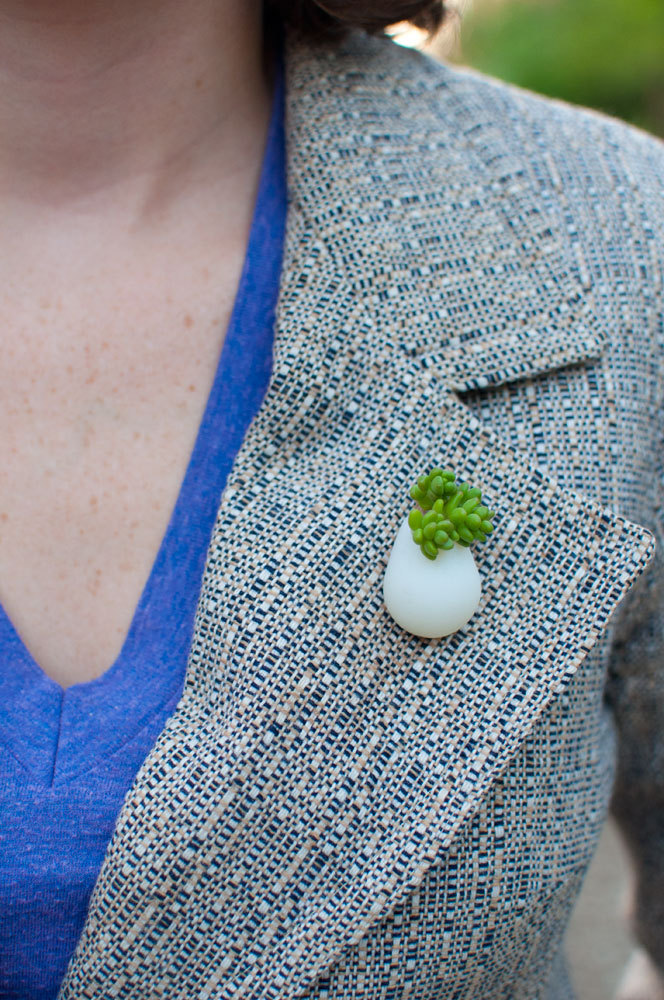
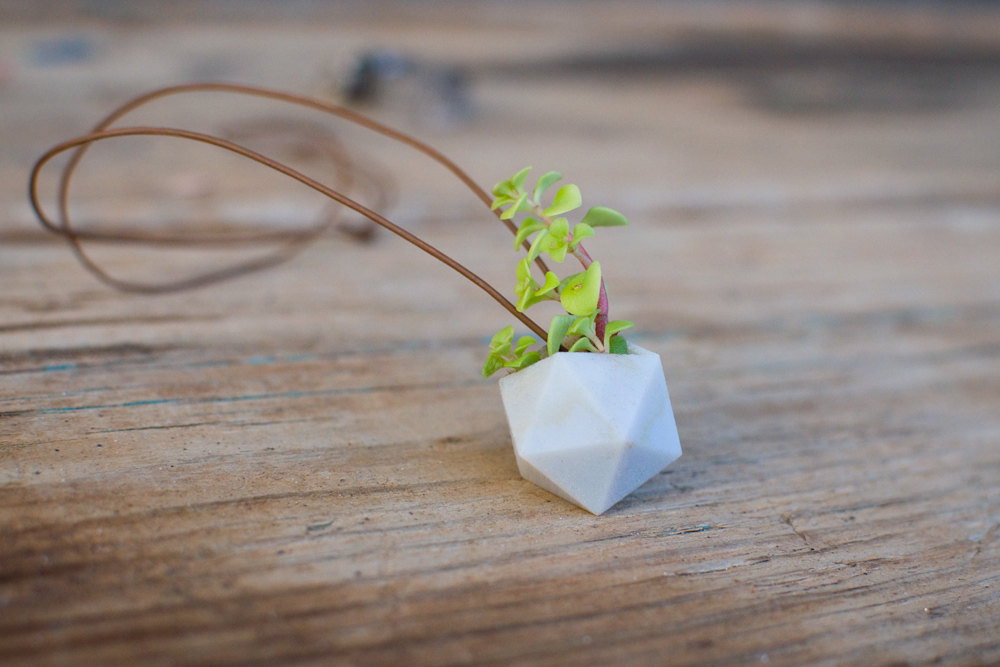
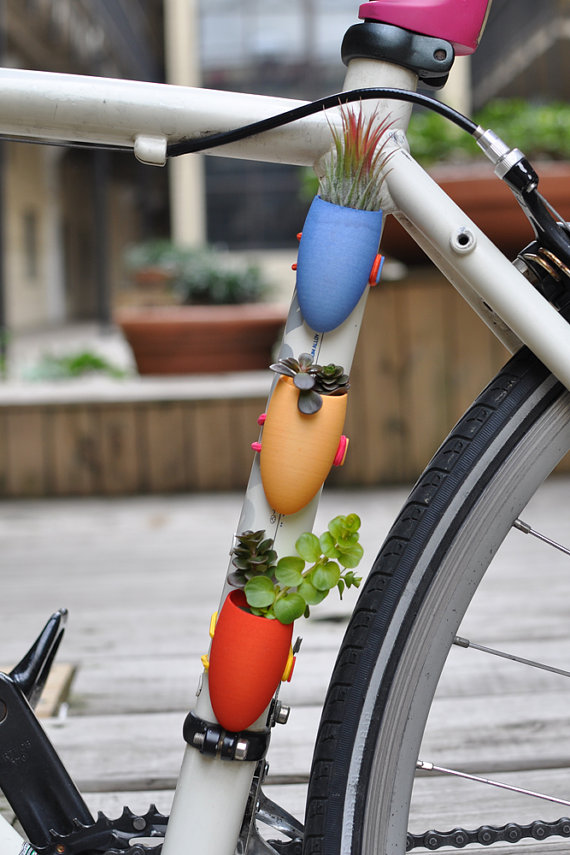
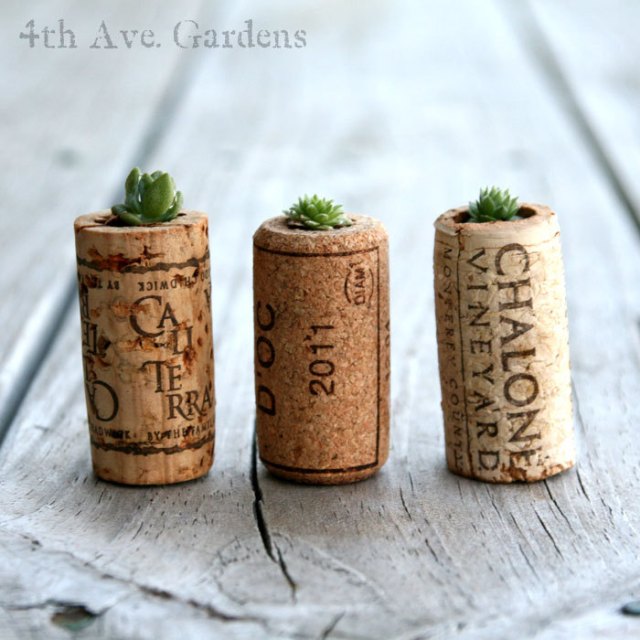
If you think maintaining a garden is just a big hassle, then maybe this is for you. These miniature planters are so adorable and easy to care for. You can display your plants, wear them or even bring them along when you do your errands. I found all these on Etsy. Click on the images to see the wonderful shops.











 adoseofsimple.com